The 2026 China-ASEAN Graduate Education Development Forum brought together representatives from more than 40 universities in China and ASEAN countries in Guiyang on July 29–30 to discuss regional cooperation and development in graduate education. With the theme “Exploring New Pathways for the Collaborative Development of Graduate Education in China and ASEAN,” the forum focused on four fields at the forefront of research: advanced materials and green chemical engineering; information technology and artificial intelligence; digital technologies and industries of the future; and medicine and health.
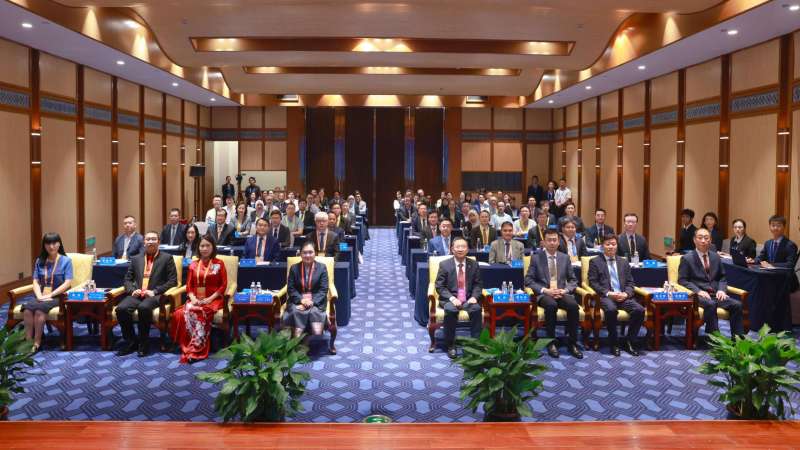
Group photo at the opening ceremony
More than 70 representatives from government departments and universities in the Chinese mainland, Macao, China, and ASEAN countries attended. They included Gao Song, President of Peking University, Dean of the Graduate School at Peking University, and an academician of the Chinese Academy of Sciences; Hao Tongliang, Deputy Director-General of the Department of Degree Management and Postgraduate Education at China’s Ministry of Education and Deputy Director of the Office of the Academic Degrees Committee of the State Council; Chen Yunkun, Deputy Secretary of the Education Working Committee of the CPC Guizhou Provincial Committee, and Secretary of the Party Leadership Group and Director of the Guizhou Provincial Department of Education; and Peng Jie, Deputy Secretary of the CPC Guizhou University (GZU) Committee. Also in attendance were Daravone Kittiphanh, Deputy Minister of Education and Sports of Laos; Nguyen Thi Thanh Minh, Deputy Director-General of the International Cooperation Department at Vietnam’s Ministry of Education and Training; and Norinsan Kamil bin Othman, Deputy Vice-Chancellor of Universiti Kebangsaan Malaysia.
The opening ceremony took place on the afternoon of July 29 in Hongfeng Hall at the permanent venue of China-ASEAN Education Cooperation Week. Jiang Guohua, Deputy Secretary of the CPC Peking University Committee and Provost, presided over the ceremony.
Gao Song described the forum as the first large-scale dialogue on graduate education among universities in China and ASEAN, which offers a new high-level platform for regional educational cooperation. Peking University maintains close partnerships with many ASEAN universities and hosts more than 600 students from ASEAN countries, Gao noted. Gao suggested strengthening cooperation by jointly establishing regular forums for dialogue, expanding reciprocal visits, and developing regional think tanks.
Daravone Kittiphanh emphasized the role of graduate education in strengthening partnerships, developing highly qualified professionals, and advancing research and innovation. Reviewing the achievements of higher education cooperation between Laos and China, she expressed hope that the two countries would further expand cooperation on interdisciplinary programs, joint research, and faculty and student exchanges.
Hao Tongliang described educational cooperation as a cornerstone of people-to-people exchanges between China and ASEAN, highlighting the role of graduate education in driving regional innovation, building mutual understanding, and supporting economic and social development. China would continue to deepen its cooperation with ASEAN countries in graduate education, Hao said, promoting deeper integration of industry, education, and research, as well as people-to-people exchanges.
Chen Yunkun noted that Guizhou, the permanent host of China-ASEAN Education Cooperation Week, had built strong friendships with ASEAN countries over the past 19 years. The province was drawing on its strengths in big data and computing capacity, using platforms such as the ASEAN-China Smart Education Institute in Colorful Guizhou to support the joint development and sharing of high-quality digital educational resources.
Peng Jie noted that GZU had established long-term partnerships with more than 70 universities and research institutions in ASEAN countries, educated more than 5,000 students from ASEAN, and trained over 3,000 local Chinese-language teachers. She hoped participants would build consensus on establishing regular forums for dialogue, improving the quality of graduate education, and nurturing a younger generation committed to friendship across borders.
Norinsan Kamil bin Othman observed that higher education should prepare students to innovate, adapt, and think globally. He urged participants to turn consensus into action by expanding graduate student exchanges, establishing interdisciplinary research networks, and working together to build an inclusive, innovative, and resilient educational ecosystem.
The Guiyang Declaration of the China-ASEAN Graduate Education Development Forum was formally released at the opening ceremony. It calls on universities in China and ASEAN to uphold openness and inclusiveness, work together to improve the quality of graduate education and strengthen their capacity to govern it, and deepen cooperation in developing high-level talent and advancing academic innovation. It also advocates supporting young people’s development and promoting exchanges and mutual learning among civilizations. These efforts would provide the talent and intellectual support needed to build a closer China-ASEAN community with a shared future.
The keynote session featured presentations by Jiang Guohua; Norinsan Kamil bin Othman; Fang Ying, Vice President of Xiamen University; Pang Chuan, Vice President of Macau University of Science and Technology and Dean of the School of Graduate Studies at the university; Chen Yanbo, Vice President of GZU; Tran Quoc Binh, Vice Rector of the University of Science at Vietnam National University, Hanoi; Peng Linxin, Executive Vice Dean of the Graduate School at Guangxi University; and Chan Oeurn Chey, Head of the Graduate School of Science at the Royal University of Phnom Penh, Cambodia. The speakers shared their views on the collaborative development of graduate education, applications of digital technologies, and talent development across regions. Chen Peng, Executive Vice Dean of the Graduate School at Peking University, chaired the session.
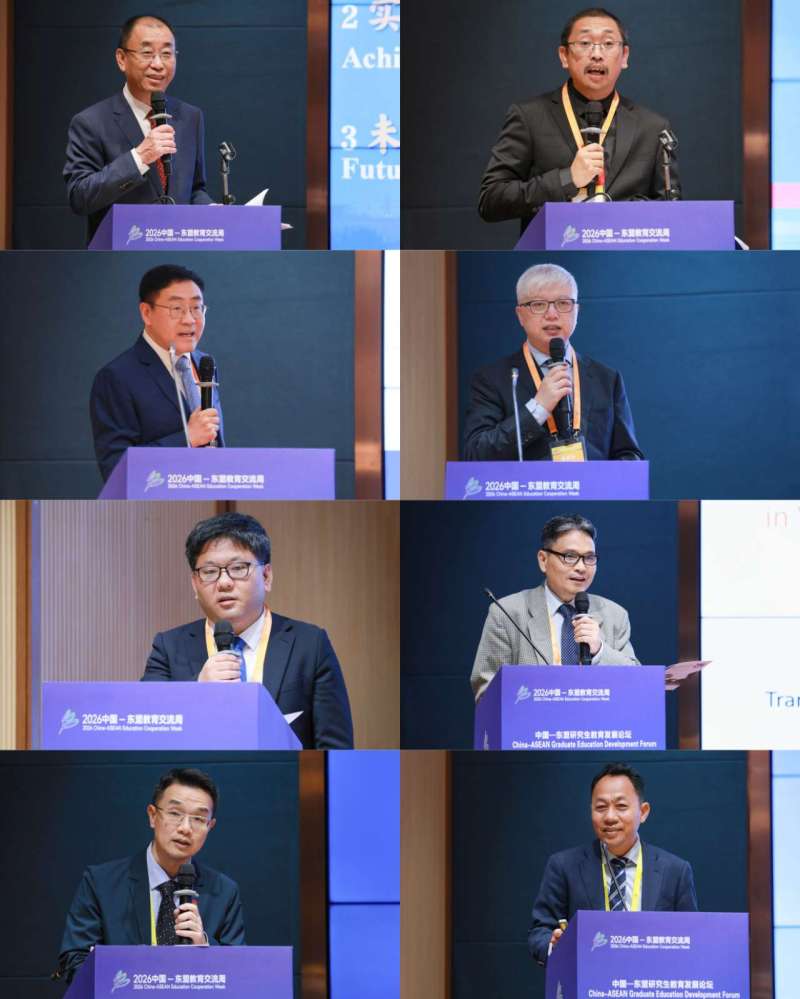
The keynote session
A roundtable on graduate education cooperation was held on the morning of July 30 in the Xianzheng Building on GZU’s West Campus. Yang Lihua, Vice Dean of the Graduate School and Director of the Institute of Humanities and Social Sciences at Peking University, and Zhang Wei, Dean of the Graduate School and Director of the Office of Development and Planning at GZU, chaired different sessions of the discussion. Representatives from Sun Yat-sen University, Universiti Sains Malaysia, China Agricultural University, Universiti Teknologi Malaysia, Universiti Brunei Darussalam, Xidian University, the National University of Laos, Peking University, Jinan University, and other institutions held in-depth discussions on new approaches to graduate education, mechanisms for international cooperation on graduate education, and the sharing of educational resources. At the closing ceremony, Xiang Song, a member of the Standing Committee of the CPC GZU Committee and Vice President of GZU, summarized the forum’s outcomes. Participants also visited the State Key Laboratory of Green Pesticides and the College of Mechanical Engineering at GZU to learn about their work.
A key event of China-ASEAN Education Cooperation Week, the forum was hosted by the Association of Chinese Graduate Schools (ACGS) and organized by the graduate schools at Peking University and GZU. Co-organizers were the graduate schools at Sun Yat-sen University, Fuzhou University, China Agricultural University, Xiamen University, Guangxi University, and Yunnan University, together with the China Center for Doctoral Education at Peking University. The School of Management at GZU provided support. The forum and the release of the Guiyang Declaration set a new direction and gave fresh impetus to regional cooperation in graduate education. ACGS will work to put the forum’s outcomes into practice, joining universities in ASEAN countries to deepen cooperation in developing high-level talent, advancing academic innovation, and promoting people-to-people exchanges, and to open a new chapter in China-ASEAN graduate education cooperation.
Student Editor: Wang Xiangyi
Editor: Pang Aizhong
Chief Editor: Li Xufeng
Senior Editor: Yao Zuozhou
Translator: Jia Haibo




