From Nha Trang’s sea breezes and sandy beaches to the green mountains surrounding Guiyang, Dam Thuy An has traveled far from home to study at Guizhou University (GZU). Currently an undergraduate in international economics and trade at GZU, she left the familiar blue sea and warm sunshine of Vietnam for a mountain city in central Guizhou. Through her studies and everyday encounters with Chinese culture, she has discovered a warmth that transcends borders. As a young Vietnamese student in China, she is also, in her own way, helping build connections among young people in China, Vietnam, and other ASEAN countries.
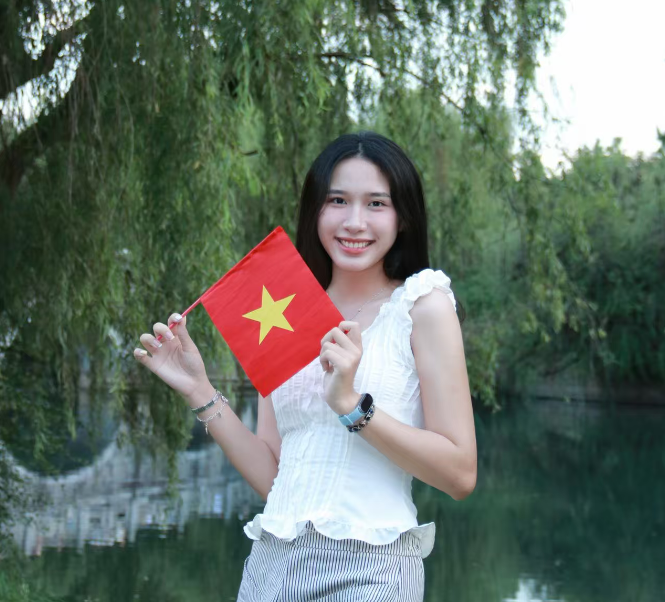
For Dam Thuy An, childhood memories are filled with the sea, beaches, and seafood of Nha Trang, a coastal city in Vietnam that enjoys sunshine year-round. A chance encounter with tourists from Guiyang first sparked her interest in Guizhou. Their warmth and friendliness gave her a wonderful first impression of people from this province in southwestern China. Already an avid fan of Chinese films, television dramas, and variety shows, she began learning Chinese on her own, and the idea of studying in China gradually took root.
Eager to experience a different landscape and climate, and to understand economic and trade ties between China and Vietnam firsthand, she finally decided to study international economics and trade at GZU. “I want to understand how the two countries’ markets are connected, and I hope one day to contribute to trade between China and Vietnam,” she said. With that ambition, she left her coastal hometown for the mountain city of Guiyang.
Settling into Guiyang took time. Nha Trang is small and easy to get around; in Guiyang, even a routine outing can mean a walk uphill. Food was another adjustment: Guizhou’s rich, spicy dishes took some time to get used to. Yet as she discovered more of the city, her initial sense of being a stranger began to fade. Within two or three months, she was starting to feel at home. Today, local dishes such as street-side hot pot, sour soup fish, and grilled fish are among her favorites.
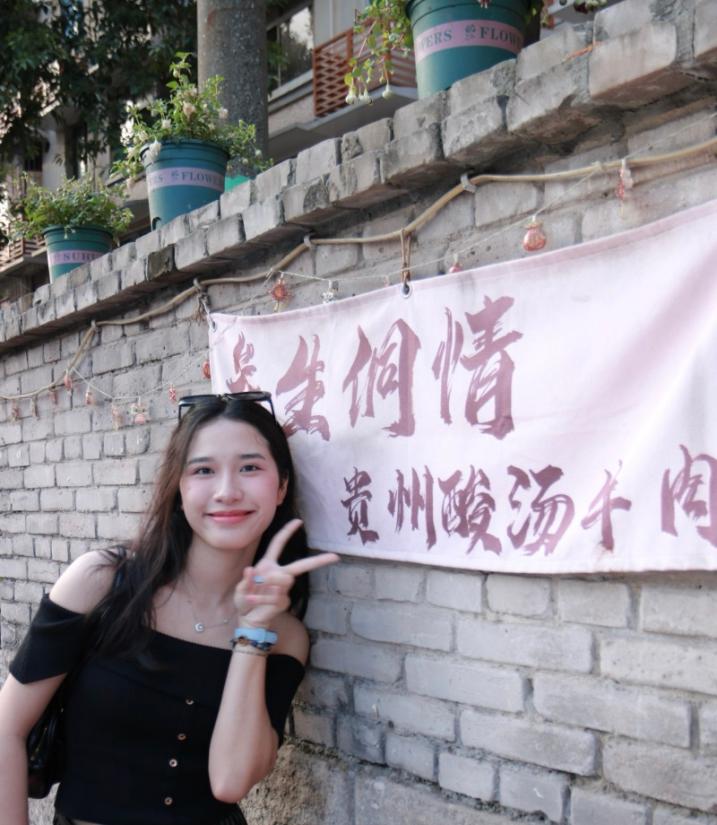
In her free time, she likes exploring the city with friends, enjoying Huaguoyuan’s lively evenings or browsing the shops at the Guiyang MixC shopping mall. What she loves most about Guiyang is its setting: “a city among mountains, with mountains within the city.” Here, natural scenery is woven into everyday urban life, and the relaxed pace makes it easy to settle in and focus on her studies.
University life brought its own challenges. When she first arrived at GZU, her Chinese was still limited, and keeping up with fast-paced lectures and unfamiliar terminology was a struggle for her. Shy by nature, she also found it difficult to approach classmates. The pressure of her studies weighed heavily on her.
But she did not have to face those challenges alone. Teachers patiently answered her questions, while classmates shared notes and helped explain difficult points. She still remembers a small act of kindness: during the Dragon Boat Festival one year, a classmate made a special trip to bring her a zongzi (a sticky rice dumpling). It was her first taste of one. She remembers its soft, chewy texture, but even more vividly, the unexpected kindness behind the gift. She now often studies and goes on outings with Chinese classmates and fellow international students from Laos, Thailand, and other ASEAN countries. These everyday friendships have brought her the pleasure of discovering other cultures.
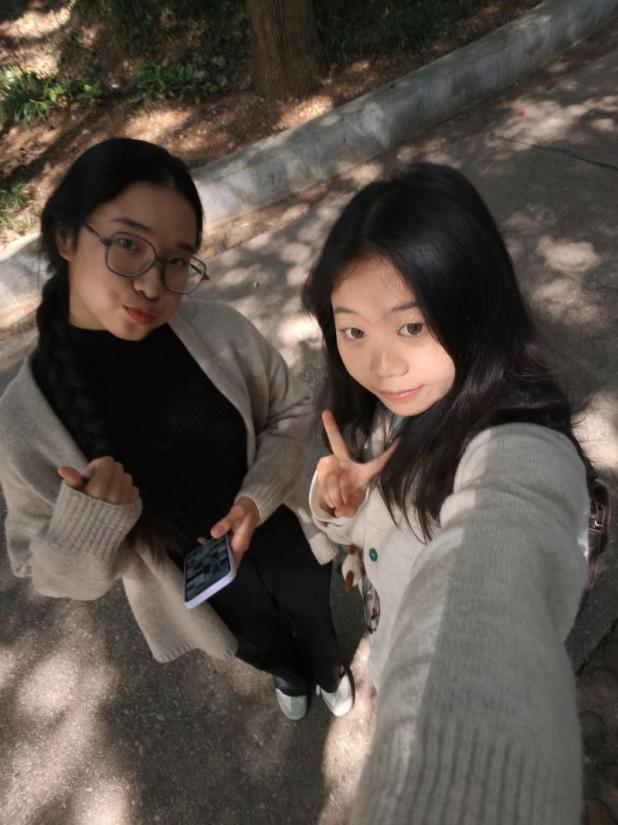
Progress came through steady effort: preparing before class, taking careful notes, and starting conversations outside class to practice her spoken Chinese. Little by little, she overcame the language barrier and was able to keep up with her classes. Her studies in international economics and trade also gave her a chance to compare notes on different countries’ markets with classmates from around the world, steadily broadening her horizons.
She once thought of Vietnam and China merely as neighbors that traded with each other. Several years of study have allowed her to recognize a much wider range of possibilities for cooperation between the two countries, from tourism and education to logistics and the digital economy. She has also noticed how much young people in the two countries have in common: their shared interests in new technology and online shopping, for instance, make it easier for them to connect. Looking ahead, she hopes to put her studies to work in import-export trade or logistics, building a career that connects the Chinese and Vietnamese markets. If circumstances allow, she would also like to continue her education and specialize further in China-ASEAN trade.

Dam Thuy An often sends photographs of the GZU campus and everyday life in Guiyang to her family and friends back in Vietnam. To her family, China once seemed distant and unfamiliar. Through her photographs and stories, they have gradually come to see a modern and appealing country. Her parents were particularly taken with what they heard about Guizhou’s impressive Huajiang Grand Canyon Bridge and hope to visit the province one day to see it for themselves.
China and Vietnam share deep cultural roots. Both celebrate the Spring Festival and the Mid-Autumn Festival, with customs that share common roots yet remain distinctive in each country. For GZU faculty and students curious about her homeland, Dam Thuy An’s recommendations are Vietnamese pho, baguettes, and coffee. She also invites them to Nha Trang to explore its islands and coral-lined coast.
With China-ASEAN Education Cooperation Week activities underway, Dam Thuy An sees particular value in bringing young people from ASEAN countries together. Geographic proximity does not always translate into understanding: many young people know little about their neighbors, and misconceptions can persist. Sharing food, culture, and music, and meeting face to face, can break down barriers and build friendships. In the long run, she believes, mutual understanding is essential if young people are to tackle shared challenges together and support continued growth in tourism and the digital economy.
As a Vietnamese student in China, she sees young people as natural bridges between China and ASEAN. Learning one another’s languages and understanding each other’s cultures can make communication easier; sharing everyday experiences on social media can break down stereotypes; and taking part in exchanges with an open, sincere attitude can bring people closer. “If young people are willing to speak up and give things a try, they will naturally grow closer,” she said.

Years of living and studying abroad on her own have transformed Dam Thuy An. Taking responsibility for everything from daily routines to planning her studies has taught her independence, along with openness to and respect for other cultures. She has made friends from many places and grown from a hesitant newcomer into a more confident young woman, comfortable in her surroundings and clearer about the path ahead.
To young Vietnamese students considering studying in China, she offers a familiar saying: “A journey of a thousand miles begins with a single step.” Pursuing a dream means facing challenges, she says, but they should not be afraid to take that first step. Whatever the outcome, the experience of studying abroad will leave them with irreplaceable memories to treasure.
Student Editor: Chen Meimei
Editor: Pang Aizhong
Chief Editor: Li Xufeng
Senior Editor: Yao Zuozhou
Translator: Jia Haibo



