For Associate Professor Yu Xiaofei and her team at the College of Tobacco Science, Guizhou University, the most satisfying sound this summer was not the ticking of laboratory instruments, but the scratch of a pen as the agreement was signed.
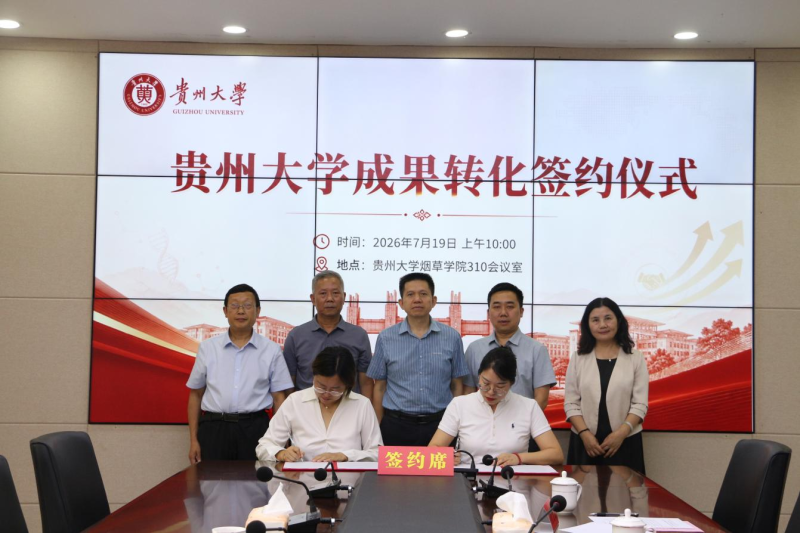
On July 19, the university signed a formal technology transfer agreement for a natural-enemy insect-based pest control technology developed over more than a decade specifically for tobacco fields in Guizhou’s mountainous areas. The deal was worth RMB 10 million. The technology represents a breakthrough in “using insects to control pests”: a “natural enemy army” of insects screened, domesticated, and bred in Guizhou’s remote mountainous areas. These insects do not eat tobacco leaves; they eat pests.
Why Use Insects to Control Pests?
Guizhou’s tobacco-growing areas are typically mountainous, and the heavy reliance on chemical pesticides there is becoming increasingly unsustainable. Pesticide residues can exceed permitted limits and threaten leaf quality. Moreover, beneficial insects are killed indiscriminately, disrupting the ecological balance. As pest resistance worsens year by year, farmers must spend more on pesticides. Yu Xiaofei, the project leader, noted that traditional chemical control treats only the symptoms, not the root cause, and that over the long term this creates a vicious cycle.
The team turned to natural enemy insects—nature’s own “biological weapons.” However, they faced a challenge: Guizhou’s mountain terrain is fragmented, and its microclimates are complex. If natural-enemy control methods developed for flatland areas are simply introduced here, the insects may fail to adapt, may not survive long after release, and ultimately may not keep pests under control. To address this problem, the team carried out more than a decade of technological research.
What Does RMB 10 Million Buy? Four Modules and a “Mountain Survival Kit”
The technology consists of four components: large-scale breeding, field application tailored to local conditions, standardized production, and supporting technical services. What makes it truly valuable; however, is the complete solution the team designed specifically for Guizhou’s mountainous regions.
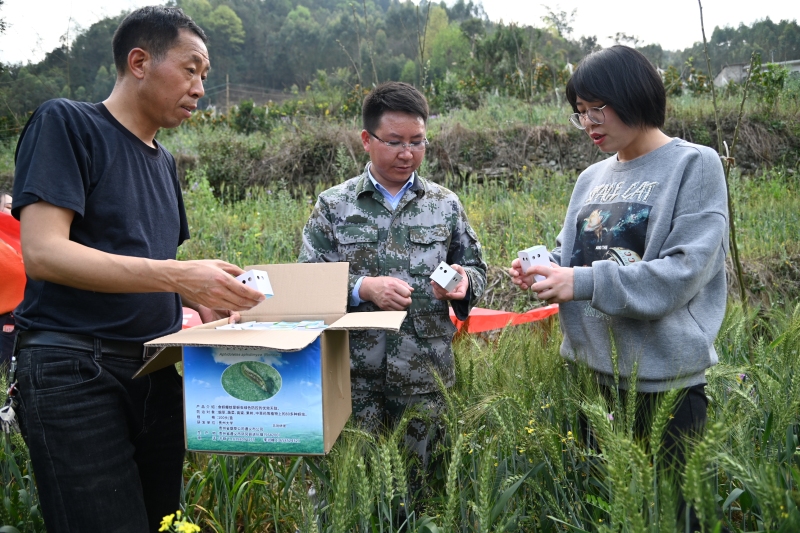
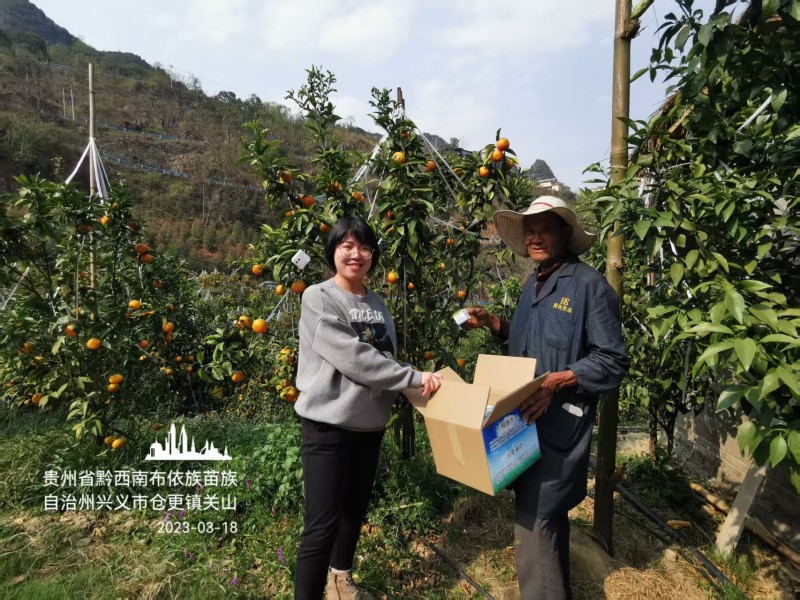
Three technical bottlenecks were addressed one after another. In the breeding stage, natural enemy insects are difficult and costly to rear at scale and have low survival rates. The team identified alternative host insects suited to Guizhou, optimized the full set of rearing parameters, and established a standardized breeding system capable of stable year-round propagation. In the release stage, because Guizhou’s fields are scattered, steep, and difficult to access, the team designed a portable release device for precise application in small plots and, for large, contiguous high-altitude fields, a drone-based release system with slow-release carriers. This “air-ground coordinated” release system is rare in plant protection in China’s mountainous areas. In the survival stage, because released natural enemies often die quickly, making pest control inconsistent, the team adjusted release density and timing and developed special packaging carriers so that the insects “stay in place, feed well, and kill pests effectively.”
Multi-year, multi-site field trial data showed that fields using this technology required significantly fewer chemical pesticide applications and produced a markedly higher proportion of high-grade tobacco leaves. Yu said the team had achieved three goals simultaneously: less pesticide, better quality, and ecological restoration.
Five Years of Negotiation: More Than a One-Off Deal
According to Yu, the partnership dates back five years, when the Guizhou University team visited its partner’s base. The partner, in turn, made several trips to the College of Tobacco Science’s laboratory and trial base for on-site verification. She noted that mutual trust had been built through face-to-face discussions and negotiations. During negotiations, the main disagreements concerned the payment model and the boundaries of intellectual property. The company sought a one-time package payment, while the university needed to cover the costs of long-term technical services and a continuous supply of seed stock. Given these concerns, the university preferred a combination of “technical service fees plus batch product purchases.” After several rounds of in-depth discussions, the two sides agreed on a total funding package of RMB 10 million, including a ten-year non-exclusive patent license, full-cycle technical services, and detailed terms for seed-stock supply. What the company receives is not just a set of technical blueprints, but ongoing technical support from Guizhou University.
At the signing ceremony, Chen Xiangsheng, Vice President of Guizhou University, described the partnership as a model for technology transfer under the “Two Mountains” vision—turning Guizhou’s ecological advantages into industrial strengths that boost local industries and raise local living standards. Yu has even bigger plans: tobacco is the core demonstration crop, and once the technology matures, it can be extended to other crops, including Chinese medicinal herbs, high-altitude fruits and vegetables, tea, and other specialty cash crops in Guizhou. The team intends to focus on developing tailored green control packages for multiple crops based on this model.
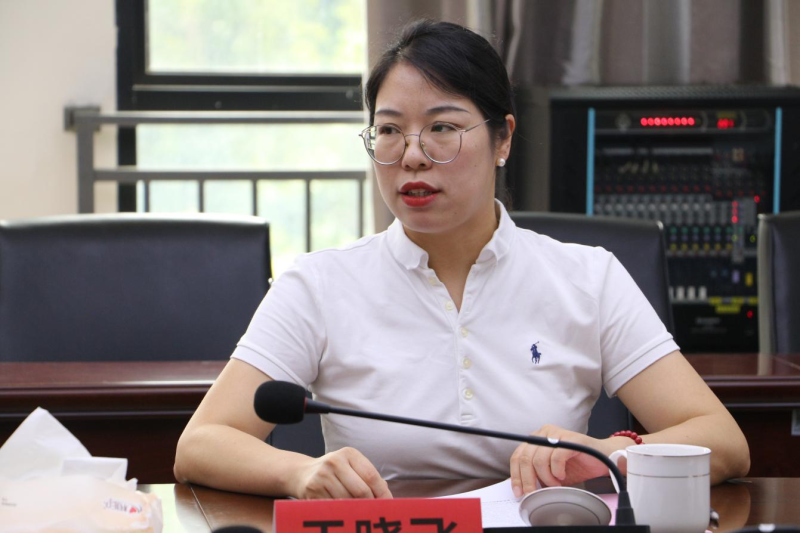
Yu stressed that university research cannot remain confined to the laboratory and academic papers. Truly useful technology must go into the fields and meet real industry needs. She added that seeing farmers use fewer pesticides and tobacco quality improve made her feel that her agricultural research was genuinely contributing to rural revitalization.
In the near future, the university and the company will scale up production and expand field demonstrations. This green control technology—developed in the mountains of Guizhou—is moving from the laboratory to tobacco fields and beyond, to the broader agricultural landscape.
Editor (Intern): Chen Meimei
Editor: Pang Aizhong
Chief Editior: Li Xufeng
Senior Editor: Yao Zuozhou
Translator: Li Xiaorong




